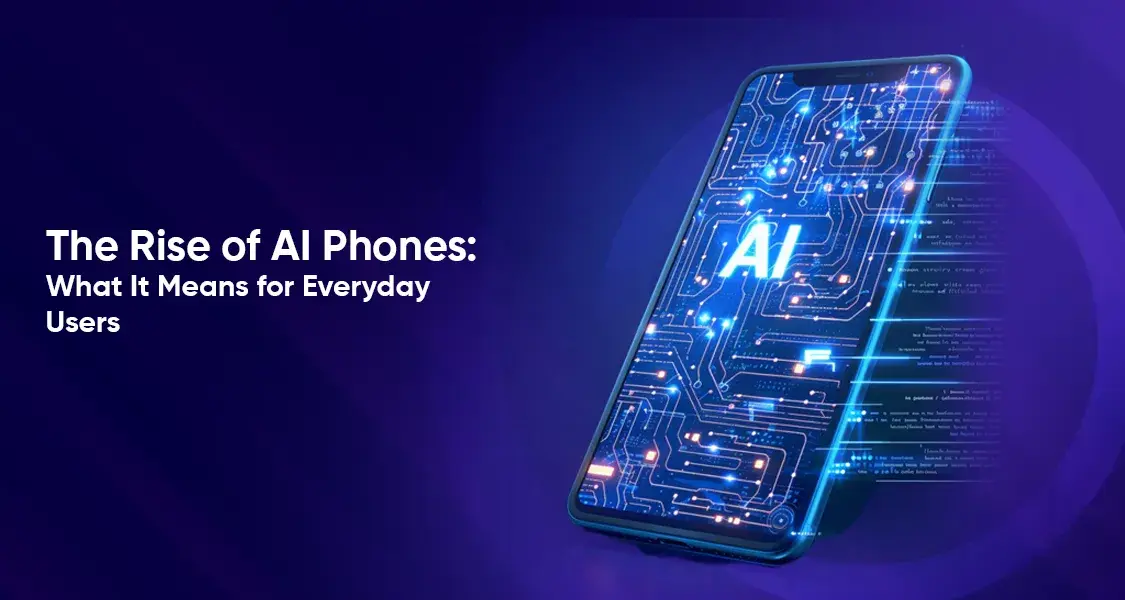
The Rise of AI Phones: What It Means for Everyday Users
Your next smartphone isn’t just smart — it thinks, predicts, and acts. Here’s everything you need to know about the AI phone revolution and whether it’s worth your rupees.
Not long ago, calling your phone “smart” just meant it could run apps and browse the internet. Today, the term barely scratches the surface. The smartphone in your pocket — or the one you’re eyeing at your local mobile shop in Lahore or Karachi — is on the verge of becoming something closer to a personal AI assistant than a mere communication device.
Welcome to the era of the AI phone.
What Exactly Is an AI Phone?
An AI phone is not simply a device with a chatbot baked in. It is a smartphone equipped with a dedicated Neural Processing Unit (NPU) — a chip designed specifically to run artificial intelligence tasks locally, on the device itself, rather than sending data to a distant server. This distinction matters enormously: on-device AI is faster, more private, and works even without an internet connection.
At the core of 2026’s leading devices are chips like Qualcomm’s Snapdragon 8 Elite and Apple’s A18 Bionic, engineered from the ground up to handle the billions of calculations that machine learning models require — in milliseconds, with minimal battery drain.
The result? Features that once required expensive desktop software or a stable internet connection are now available from your palm — and they are getting smarter with every software update.
The result? Features that once required expensive desktop software or a stable internet connection are now available from your palm — and they are getting smarter with every software update.
Also Read: Top AI Features in Smartphones You Should Be Using Right Now
AI Features That Actually Matter for You
Not all AI is created equal. Beyond the marketing buzzwords, here are the capabilities that are genuinely reshaping how Pakistanis and everyday users around the world use their phones:
AI Camera & Photography
Scene recognition, real-time object removal, low-light enhancement, and AI-guided composition. Your photos look professional even if you are not.
Real-Time Translation
Live call translation and on-screen text translation across dozens of languages — including Urdu. Ideal for travel, business, and communication with family abroad.
AI Writing Assist
Drafts emails, summarises long threads, rewrites WhatsApp messages to sound more professional — all without leaving the app.
Predictive Intelligence
The phone learns your habits and pre-loads apps, suggests your next action, and manages battery around your daily routine.
On-Device Privacy
Sensitive tasks like photo editing and voice processing happen on the chip — not on a cloud server. Your data stays yours.
Health AI
Advanced wearable integration with AI-powered energy scores, sleep analysis, and personalised health recommendations.
What Does This Mean for the Average Pakistani User?
The honest answer: quite a lot — even if you never consciously activate a single AI feature. AI is already silently working in the background every time you take a photo, receive a notification, or ask your phone to do anything at all.
A study commissioned by Samsung found that people who regularly used mobile AI reported a higher quality of life across creativity, productivity, physical health, and even social relationships. And by some measures, Galaxy AI is experiencing the fastest adoption rate of any service Samsung has ever launched — fuelled largely by users discovering features rather than seeking them out.
For Pakistani users specifically, the most practical near-term benefits include:
- Better photos without learning photography — crucial for a generation that documents everything.
- Urdu and multilingual support — features like Samsung’s Writing Assist now cover 41 languages.
- Smarter battery management — AI learns your usage patterns and extends your phone’s life through the day.
- Translation for freelancers and small business owners — communicate professionally in English even when writing in Urdu.
- Productivity tools for students and office workers — summarizing notes, drafting messages, searching smarter.
Should You Be Concerned? Privacy & the Pakistan Context
No technology arrives without trade-offs. With AI phones, the primary concern for most users is data privacy — specifically, where AI processing happens and who has access to it.
The good news is that the industry has heard these concerns. The strongest trend in 2026 is the shift toward on-device AI — processing that happens entirely within your phone’s chip, never leaving your device. Apple has made this a foundational pillar of Apple Intelligence. Samsung’s Galaxy AI similarly runs many features locally.
For cloud-based AI features (which still offer the most powerful capabilities), read the privacy settings on your device. Both Samsung and Apple provide clear toggles in their settings menus indicating which features use cloud processing.
What’s Next: The AI Phone Roadmap
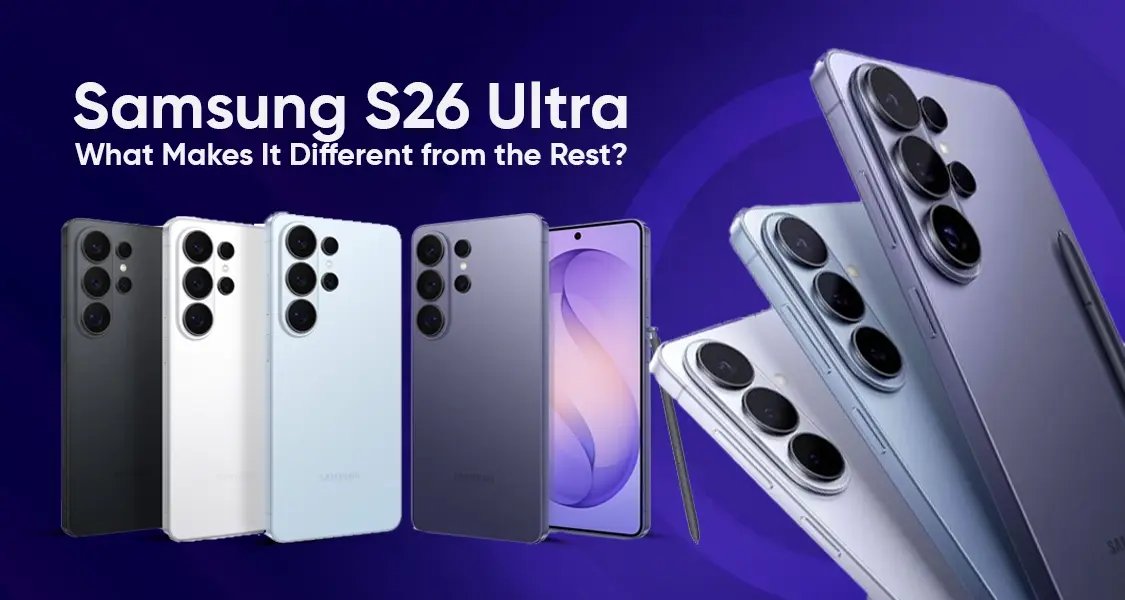
The evolution is moving fast. Samsung’s Galaxy S26, unveiled in February 2026, introduced a new AI layer focused on predictive tasking — the phone anticipates what you want to do next and, in some cases, completes tasks on your behalf. Google’s Gemini assistant is being integrated directly into apps like ride-sharing and food delivery, meaning the AI doesn’t just respond to queries — it proactively manages your life.
Apple, meanwhile, continues to refine Siri as a deeply contextual assistant that understands your apps, your calendar, and your habits — all while keeping processing private and local.
The next frontier? Agentic AI — phones that don’t just answer questions but take multi-step actions across apps without being asked. Booking a restaurant, rescheduling a meeting, replying to an email based on calendar context — all initiated by a single natural language command.
Pakistan’s growing 5G rollout and increasing smartphone penetration mean this wave is coming here too — and sooner than many expect. Whether you are a student in Lahore, a freelancer in Islamabad, or a small business owner in Karachi, the AI phone is not a luxury gadget for tech enthusiasts. It is, increasingly, the most capable tool you will carry.
TechBazaar Verdict
The AI phone era is not coming — it is already here, and it is accelerating. The question is no longer whether to get an AI-capable device, but which AI features actually matter for your lifestyle and how much you should spend to get them.
If you are due an upgrade, 2026 is an excellent time to make the move. Even mid-range devices now offer meaningful AI capabilities. Start with our AI Phone Buying Guide for Pakistan, check the latest prices, and make a choice that will serve you well for the next three to four years.
The best phone you have ever owned is probably the next one you buy — as long as it thinks.