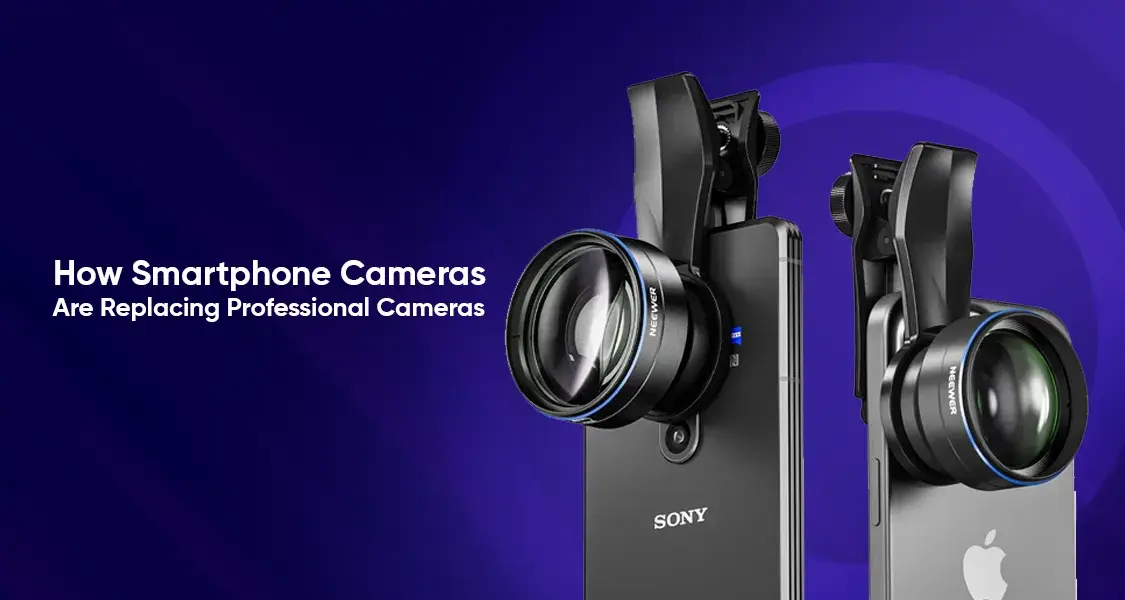
How Smartphone Cameras Are Replacing Professional Cameras?
Not long ago, if you wanted a stunning portrait with a blurred background, crisp wildlife shots, or professional-quality video footage, you had one choice: invest in a bulky DSLR or mirrorless camera with an expensive lens kit. Today, the phone in your pocket can do all of that — and in many scenarios, do it better. The smartphone camera revolution isn’t coming. It’s already here.
The hardware has caught up
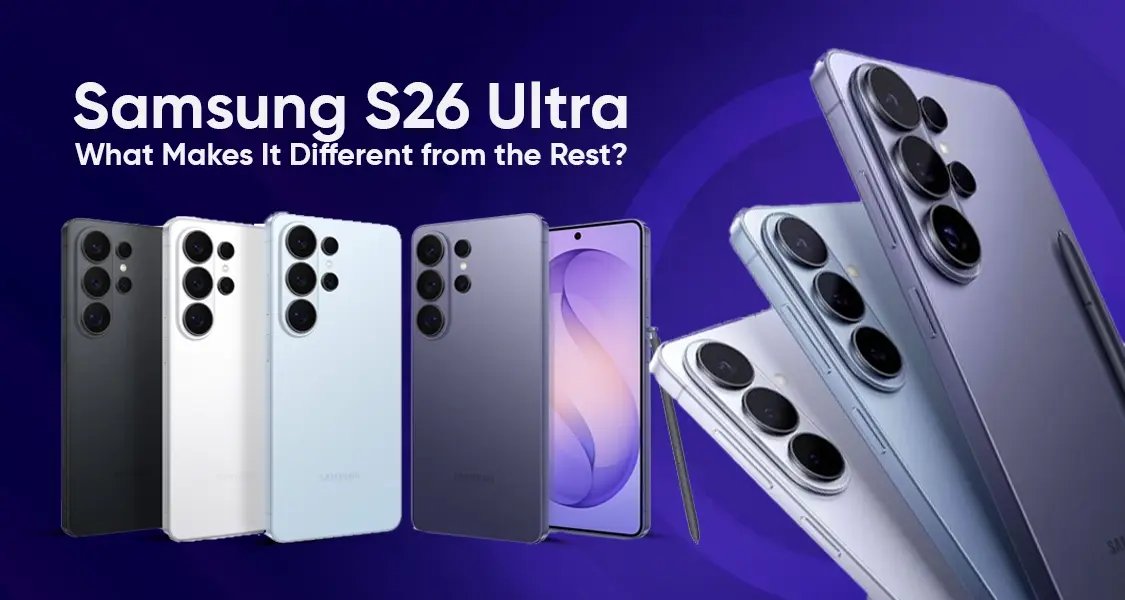
Modern flagship smartphones — like the Samsung Galaxy S26 Ultra or the Apple iPhone 17 Pro Max — now pack multi-lens systems that would have seemed absurd five years ago. We’re talking about dedicated ultrawide, main, and periscope telephoto lenses, each fine-tuned for different shooting distances. Optical zoom that once required a telephoto lens the size of your forearm is now built into a device 6mm thin.
Sensor sizes have grown dramatically too. While they still can’t match the full-frame sensors in top-tier mirrorless bodies, the computational tricks applied to smaller sensors often produce images that are indistinguishable to the human eye — and sometimes even superior in low-light conditions thanks to AI-driven noise reduction.
AI and computational photography: the real game-changer
Pure hardware is only half the story. What truly separates today’s smartphone cameras from those of five years ago is computational photography — the use of artificial intelligence and machine learning to process images in ways no optical sensor alone could achieve.
Night mode
AI stacks multiple exposures in milliseconds, delivering bright, sharp photos in near-complete darkness.
Portrait & bokeh
Depth-sensing and ML-based subject detection create convincing background blur without a fast prime lens.
Computational zoom
AI upscaling and multi-frame fusion extend zoom far beyond the physical optics would allow.
Real-time HDR
Scene analysis in the viewfinder ensures perfect exposure across highlights and shadows simultaneously.
Google’s Pixel series has built its entire identity around this philosophy — Google Pixel phones consistently top camera benchmarks not because of exotic hardware, but because of Google’s unmatched image processing algorithms. This is a paradigm shift: the camera software has become as important as the lens.
Also Read: Top AI Features in Smartphones You Should Be Using Right Now
Where professionals are making the switch
It’s not just casual photographers abandoning their DSLRs. Professional photographers, journalists, and videographers are increasingly using smartphones as primary or backup tools. Photojournalists love the discretion — a smartphone doesn’t signal “press photographer” to a crowd. Social media content creators, who need fast turnaround and built-in editing workflows, have almost entirely ditched traditional cameras.
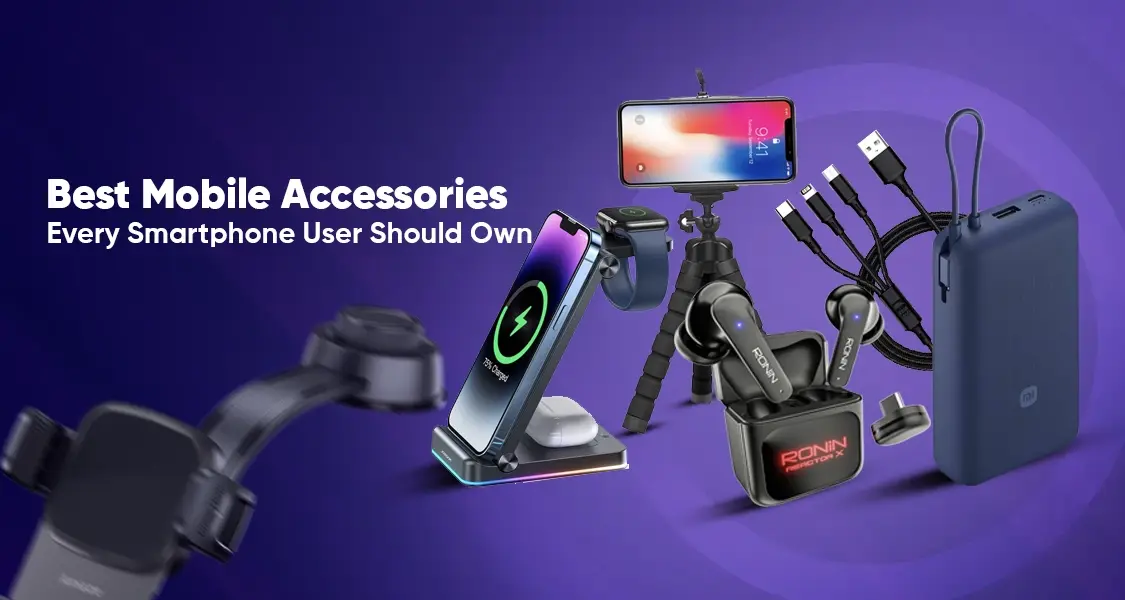
Even in video production, flagship phones shooting in ProRes or LOG formats are now used on television commercials and short films. The stabilisation offered by modern phones, combined with 8K recording capability, makes them viable production tools. This has also driven a boom in smartphone accessories gimbals, clip-on anamorphic lenses, and external microphone kits that extend what a phone can do on set.
Where professional cameras still win
To be fair, this is not the end of professional cameras — at least not yet. Dedicated cameras still have a decisive edge in specific scenarios:
Interchangeable lenses: No phone can replicate a 600mm telephoto for wildlife, or a tilt-shift lens for architectural photography. The flexibility of a mirrorless system with dozens of lenses available remains unmatched.
Dynamic range in RAW: While phones produce excellent JPEGs, a full-frame RAW file from a Sony A7R VI or Canon EOS R5 still gives professional photo editors significantly more latitude in post-processing.
Battery and handling: A dedicated camera is purpose-built for photography. Extended shoots, ergonomic grips, dual card slots, and weather sealing matter enormously in demanding environments.
Professionals working in studios, shooting sports, or doing fine-art landscape photography will be clinging to their DSLRs and mirrorless bodies for years to come.
What this means for buyers in Pakistan
For the average Pakistani consumer, the calculus has never been clearer. Unless you are a working professional with specific optical needs, investing in a dedicated camera is increasingly hard to justify. A mid-range flagship phone — such as the Samsung Galaxy A series — will deliver photography quality that would have required a ₨80,000+ camera setup just a few years ago.
If you do want to elevate your smartphone photography further, the investment is better made in accessories: a quality tripod, a Bluetooth remote shutter, and good phone protection to keep your gear safe go a long way.
For those who still want the flexibility of interchangeable lenses on a budget, consider an entry-level mirrorless body paired with one versatile kit lens — and use your phone for everything else.
Final word
Smartphones haven’t made professional cameras obsolete — but they’ve made them optional for a vast majority of users. As AI processing grows more powerful and sensors continue to improve, the line between “phone photo” and “professional photo” will keep blurring. For most of us, the camera revolution is already over, and our phones won.