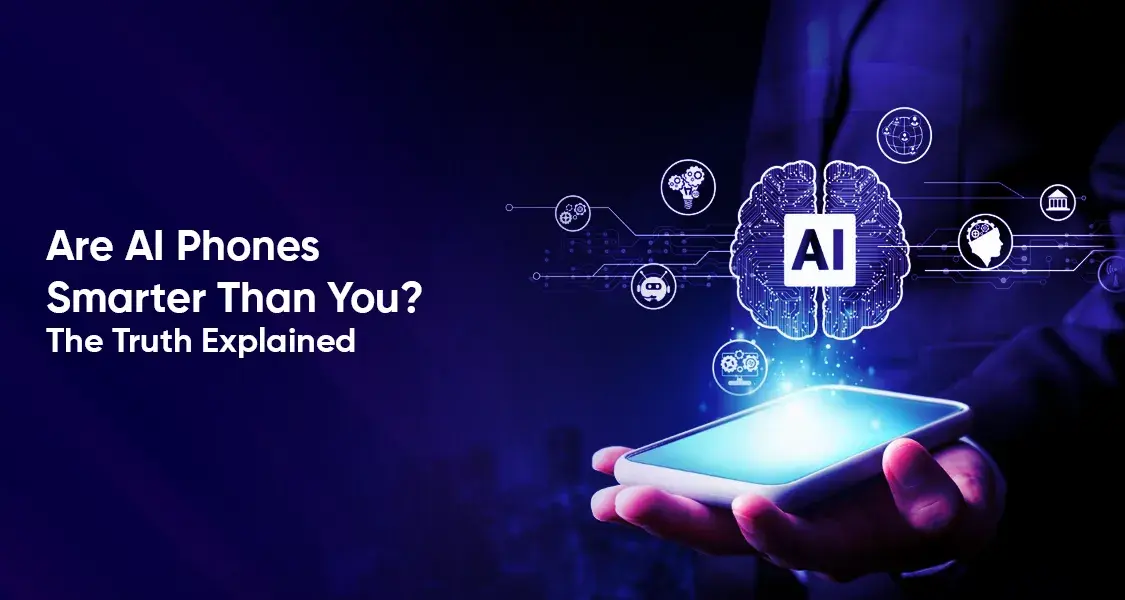
Are AI Phones Smarter Than You? The Truth Explained
Every new phone launch in 2026 seems to come with the same pitch: “smarter than ever,” “your AI companion,” “thinks ahead of you.” Walk into any mobile market in Lahore, Karachi, or Multan and you’ll hear shopkeepers throw around “AI camera” and “AI assistant” like they’re standard features now — and honestly, they almost are.
But here’s the real question buyers in Pakistan are starting to ask: is your phone actually smarter than you, or is it just really good at faking it? Let’s separate the marketing from the reality.
What Actually Makes a Phone “AI”?
A few years ago, “AI” on a smartphone meant a camera that could tell the difference between a sunset and a plate of biryani. That’s no longer the case. Today’s AI phones are built around a dedicated Neural Processing Unit (NPU) sitting alongside the main chipset — found in processors like Snapdragon 8-series, Google’s Tensor chips, and MediaTek’s Dimensity lineup.
This NPU lets the phone run AI tasks directly on the device instead of sending everything to the cloud. That means:
- Real-time translation during a phone call, without an internet round-trip
- Photos enhanced and objects removed instantly, without uploading anywhere
- Voice notes transcribed and summarized on the spot
- Smarter battery management that learns your usage patterns
If you’re shopping for a new device, it’s worth browsing TechBazaar’s Mobiles section to see how recent launches like the Infinix Note 60 and Note 60 Pro are positioning these on-device AI features as a core selling point, not just a bonus.
Where AI Phones Genuinely Outperform You
Let’s give credit where it’s due. There are specific tasks where your phone’s AI is faster and more consistent than your brain will ever be:
1. Pattern recognition at scale. Your phone can scan thousands of photos in seconds to find every picture with your dog in it. You can’t.
2. Multilingual translation on the fly. Many 2026 flagships can translate a live conversation between two languages in real time. Most humans need years to do that in one language, let alone two.
3. Battery and performance optimization. AI now predicts which apps you’ll open next and pre-loads them, while quietly throttling the ones you never touch — extending battery life without you lifting a finger. If you want to understand how much of this is software versus your own habits, our guide on how to extend your smartphone’s battery life is a good companion read.
4. Threat detection. AI security systems can flag a phishing SMS or a deepfake voice call faster than most people would even notice something was off.
So yes — for narrow, repetitive, data-heavy tasks, your phone wins. Easily.
Where You’re Still Smarter Than Your Phone
Here’s the part the marketing copy conveniently leaves out: AI phones are pattern-matchers, not thinkers.
- They don’t understand context the way you do. Your phone can summarize a long message, but it doesn’t know why your friend is upset — it’s guessing based on word patterns.
- They can’t make judgment calls with real stakes. Should you take that job offer? Lend your cousin money? Your phone has no opinion worth trusting here.
- They don’t have genuine creativity. AI-generated photo edits and captions are remixes of patterns it has seen before, not original ideas born from lived experience.
- They don’t learn the way you do. A human can learn an entirely new skill from a single bad experience. AI models need enormous amounts of data and retraining to adjust.
In short: your phone is an extraordinarily fast assistant, not a replacement brain. It’s smarter than you at specific, narrow tasks — and far behind you at almost everything that requires real understanding, ethics, or judgment.
The Pakistan Angle: Is It Worth Paying for “AI” Here?
This matters more in Pakistan than in most markets, because AI flagship phones often come with a price premium — and PTA taxes can add a serious chunk on top. Before you chase the “smartest” phone on the shelf, it helps to understand the real cost. Our breakdown of PTA tax on the iPhone 15 series and our comparison of imported vs PTA-approved phones are essential reading if you’re planning to import a device specifically for its AI features.
The good news: you don’t need a PKR 300,000+ flagship to get useful AI features anymore. Mid-range phones increasingly ship with on-device AI for photography and voice tasks, even if they lack the full suite of flagship-only tools. If budget is a concern, check out our picks for top smartphones under PKR 100,000 and best budget phones under 50k — several of these now include AI camera and assistant features that would have been flagship-exclusive just two years ago.
It’s also worth noting how much of the “AI phone” experience depends on your network. Real-time translation, cloud-assisted image generation, and live AI search all lean on a fast connection. If you’re not yet on 5G, our piece on how 5G will change the internet in Pakistan explains why your AI features might feel slower or more limited than what reviewers are showing online.
So, Are AI Phones Smarter Than You?
The honest answer: at specific tasks, yes — at being human, not even close.
Your phone can transcribe a meeting faster than you can type, translate a conversation in real time, and recognize your face in 10,000 photos in seconds. But it can’t read a room, make an ethical call, or come up with something genuinely original. It’s a tool that amplifies your intelligence — not a substitute for it.