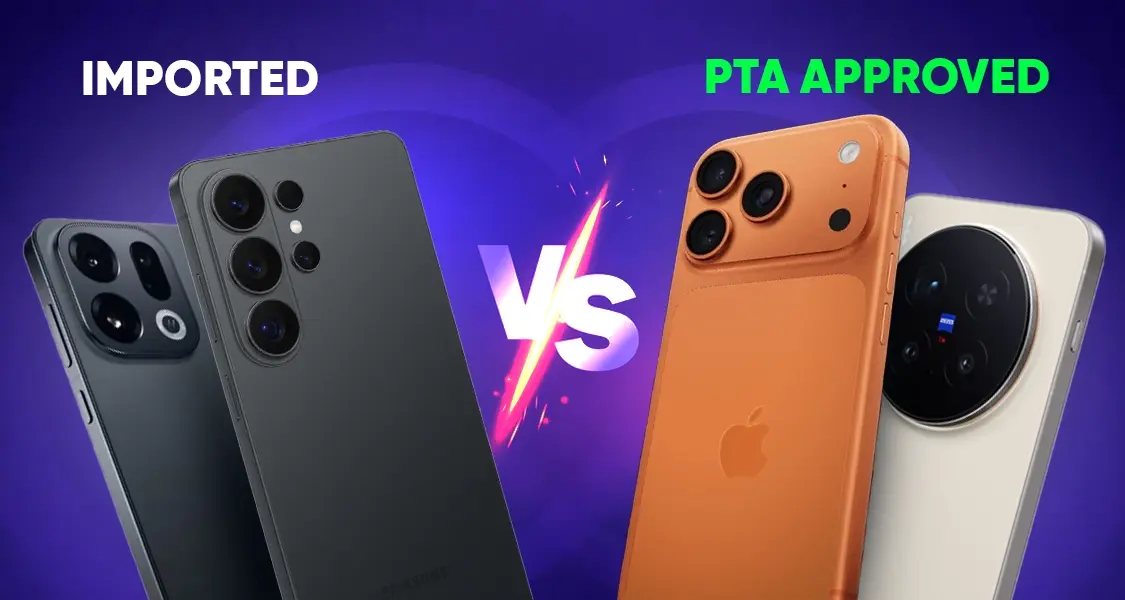
Imported vs PTA Approved Mobile Phones – Which One is Better?
If you’ve ever bought or even thought about buying a smartphone in Pakistan, you’ve faced this classic dilemma: Imported (Non-PTA) vs PTA Approved phones. It’s like choosing between a luxury car with no registration and a locally registered one that’s slightly expensive but hassle-free. So, what’s the smarter choice?
Here’s the twist—this debate has become even more interesting in 2026. Why? Because recent changes in PTA tax policies have shaken the market, making imported phones more attractive than before. But does that mean they’re better? Not necessarily.
Let’s break everything down step by step in a way that actually helps you decide—not confuse you further.
What is a PTA Approved Phone?
A PTA approved phone is like a fully licensed vehicle—you can use it freely without worrying about getting stopped. These devices are officially registered with the Pakistan Telecommunication Authority (PTA), meaning they are legally allowed to operate on all local SIM networks without any restrictions.
When you buy a PTA approved phone, you’re essentially paying for peace of mind. The approval process involves registering the device’s IMEI through the DIRBS system and paying the required taxes. Once that’s done, your phone works seamlessly across all networks in Pakistan.
But here’s the catch—this convenience comes at a cost. PTA-approved phones are usually more expensive because their price already includes the hefty tax component. For high-end smartphones, that tax can sometimes feel like buying a second phone altogether.
Still, if you’re someone who values reliability and hates dealing with complications, a PTA approved phone is the simplest route.
What is an Imported (Non-PTA) Phone?
An imported or non-PTA phone is basically a smartphone brought from abroad without being registered with PTA. Think of it as a premium gadget that hasn’t been “legalized” yet for use in Pakistan.
These phones are often significantly cheaper—sometimes 30% to 50% less than their PTA-approved counterparts. That’s why they’re extremely popular, especially among tech enthusiasts and budget-conscious buyers.
However, there’s a major limitation. According to PTA rules, if your phone is not registered, it can only work with local SIMs for about 60 days. After that, it gets blocked.
So yes, you’re saving money upfront—but you’re also signing up for limitations.
How PTA System Works in Pakistan
The PTA uses a system called DIRBS (Device Identification, Registration and Blocking System) to regulate mobile devices. Every phone has a unique IMEI number, and this system tracks whether that device is registered or not.
If your phone isn’t registered within the allowed time, it gets blocked from all local networks. This system was introduced to curb illegal imports and ensure proper tax collection.
In simple terms, DIRBS acts like a digital gatekeeper—it decides whether your phone is allowed to “enter” Pakistan’s mobile network ecosystem or not.
Why Phones Get Blocked
Phones get blocked mainly for one reason: unpaid taxes. The government requires users to pay a PTA tax for any device brought from outside Pakistan.
If you skip this step, the system automatically blocks your device after a certain period. This ensures compliance and prevents misuse of unregistered devices.
It’s not about punishing users—it’s about regulating the market and boosting local manufacturing.
PTA Tax in 2026 – Latest Updates
In 2026, the government introduced revised valuation rules that significantly reduced PTA taxes on many imported phones. Some devices saw reductions of up to 89%, especially older or used models.
This move was aimed at making smartphones more affordable and aligning prices with global markets. It also encouraged more users to legally register their devices instead of avoiding the system.
So, if you’ve been avoiding PTA registration because of high costs, now might be a good time to reconsider.
Key Differences Between Imported and PTA Approved Phones
Price Comparison
Imported phones are undeniably cheaper. You can often get a flagship device for significantly less than its PTA-approved version. However, once you add the PTA tax, the price gap shrinks dramatically.
It’s like buying a cheap airline ticket and then paying extra for baggage, meals, and seat selection—it adds up quickly.
Network Usability
This is where PTA-approved phones shine.
- PTA Approved: Works perfectly with all SIMs
- Imported: Limited usage or requires registration
If you rely heavily on mobile data, calls, and WhatsApp, a non-PTA phone can quickly become frustrating.
Resale Value
Resale value is another critical factor.
PTA-approved phones have better resale value because buyers prefer hassle-free devices. Imported phones, especially non-registered ones, often sell at lower prices.
Think of it like selling a car—would you buy one without proper registration?
Pros and Cons of Imported Phones
Advantages
Imported phones come with some undeniable perks:
- Lower initial cost
- Access to latest models earlier
- Ideal for WiFi-only users
They’re perfect for tech lovers who want cutting-edge devices without paying full price.
Disadvantages
But here’s the reality check:
- Limited SIM functionality
- PTA registration cost
- Lower resale value
In many cases, the “cheap” option can become expensive in the long run.
Pros and Cons of PTA Approved Phones
Advantages
PTA-approved phones offer:
- Full network access
- No legal issues
- Better resale value
They’re reliable, predictable, and stress-free.
Disadvantages
Of course, nothing is perfect:
- Higher upfront cost
- Limited availability of some models
But for many users, these downsides are worth the convenience.
Which One Should You Choose?
Best for Budget Users
If you’re tight on budget and mostly use WiFi, imported phones can be a smart choice. They give you premium features at a fraction of the cost.
Best for Long-Term Users
If you want reliability and long-term usability, PTA-approved phones are the better option. They eliminate all the headaches associated with registration and network issues.
Common Myths About PTA and Imported Phones
A lot of misinformation floats around this topic.
Some people think non-PTA phones are “illegal”—they’re not. They just need registration. Others believe PTA taxes are fixed—they’re not; they vary based on phone value and policy changes.
Understanding these nuances can save you both money and frustration.